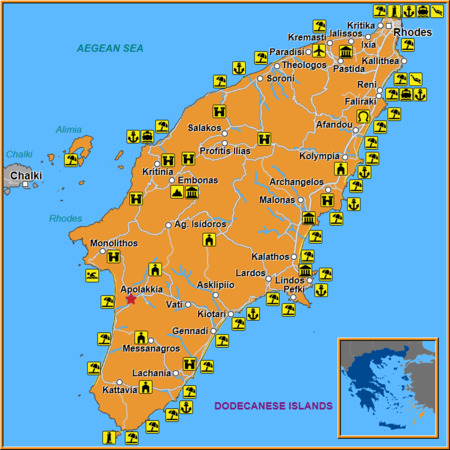
Apolakkia, a serene hillside village in Rhodes, offers travelers a blend of traditional architecture, lush landscapes, and panoramic sea views. By following its winding roads and ancient footpaths, you can discover secrets that even seasoned visitors often miss.
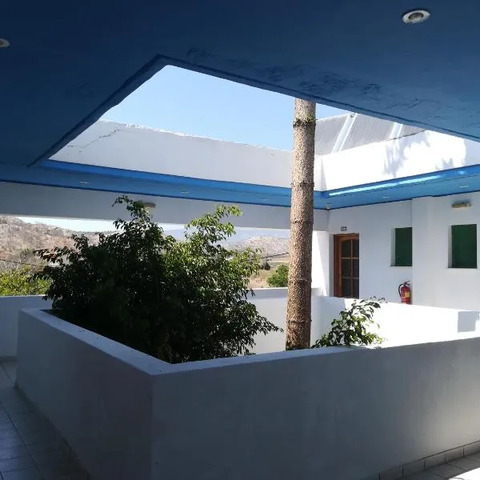
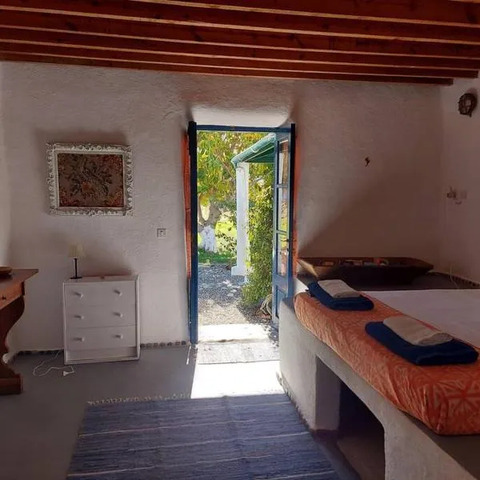
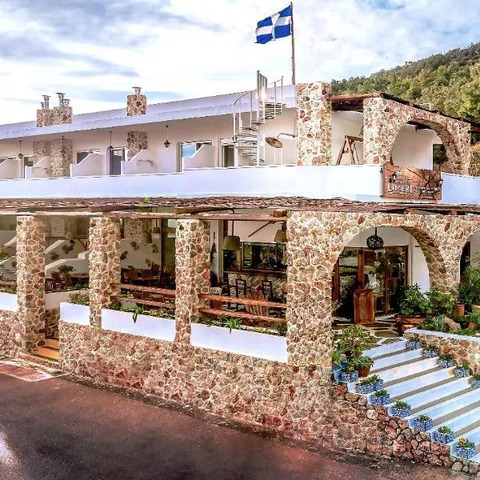
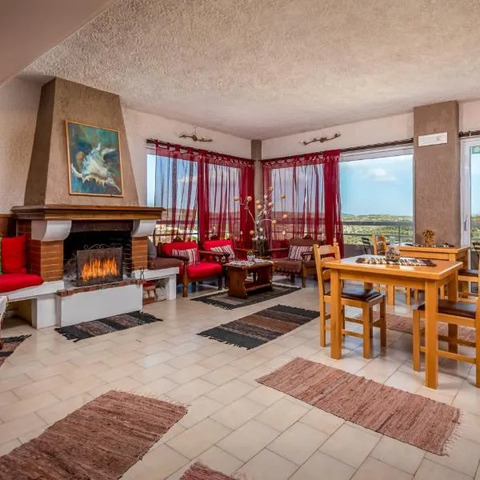
We suggest for your stay:
Still Looking for the Perfect Stay?

Why Apolakkia Matters
Historical roots: Founded in the 12th century, the village preserves medieval stone houses and a Byzantine church dedicated to St. John.
Scenic vistas: From its elevated position, you get sweeping views of the Aegean, the neighboring villages, and the famed Rhodes Castle in the distance.
Cultural authenticity: Local artisans still practice pottery and weaving, offering unique souvenirs that carry a piece of island heritage.
Key Landmarks on the Map
St. John’s Church (Iera Moni Agiou Ioannou) – A stone structure with frescoes dating back to the 15th century.
The Old Olive Grove – An ancient grove that has survived for over 800 years, perfect for a quiet picnic.
Apolakkia’s Main Square (Plateia Apolakkias) – The heart of village life where weekly markets and festivals take place.
Viewpoint Over the Sea – A small cliffside path leading to a lookout that offers 360° views of the coastline.

Hidden Gems Worth Exploring
The Secret Cave (Kaveia): Accessible via a narrow trail, this limestone cave houses stalactites and an underground spring.
Traditional Guesthouse: Stay overnight in a restored stone house with modern amenities while keeping the rustic charm intact.
Local Farm Tours: Join a guided tour of nearby olive farms to learn about sustainable harvesting practices.
Nearby Villages That Complement Your Journey
Apolakkia’s proximity to several other villages makes it an ideal base for a broader exploration of Rhodes. Here are some close-by gems you should consider:
Messanagros Village – Known for its ancient ruins and the beautiful Kallithea beach.
Monolithos Village – Home to the impressive Monolithos Castle, offering panoramic sea views.
Vati Village – A tranquil spot with lush pine forests and traditional tavernas serving local cuisine.
Agios Isidoros Village – Features a historic church and a small museum dedicated to island folklore.
Kattavia Village – Famous for its 17th‑century architecture and the Chora square where locals gather.
Asklipiio Village – A hidden coastal enclave with pristine beaches and a quiet atmosphere.
Practical Tips for Travelers
Best Time to Visit: Late spring (May–June) or early autumn (September) when temperatures are mild, and the crowds thin out.
Getting Around: Rent a scooter or join a local tour group; many paths are not well marked, so having a guide can be invaluable.
Local Etiquette: When visiting churches or monasteries, dress modestly and keep noise levels low to respect the spiritual atmosphere.
Cuisine Highlights: Don’t miss the stifado (slow‑cooked meat stew) served in traditional taverns and the fresh seafood risotto at seaside restaurants.
Conclusion
Apolakkia is more than just a picturesque village; it’s a gateway to Rhodes’ hidden treasures. By mapping its landmarks, exploring its secret spots, and venturing into nearby villages like Messanagros, Monolithos, Vati, Agios Isidoros, Kattavia, and Asklipiio, travelers can experience the island’s rich tapestry of history, culture, and natural beauty.
Ready to Explore?
Grab a map, pack your curiosity, and let Apolakkia guide you through Rhodes’ most enchanting corners.