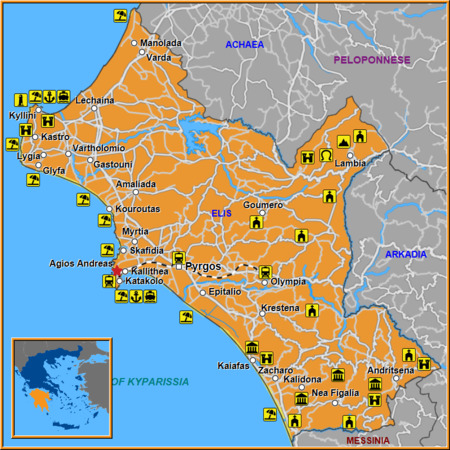
Agios Andreas, a modest village nestled in the heart of Elis, offers travelers a quiet yet profound glimpse into Greece’s rich tapestry of history and culture. While its own landmarks—such as the ancient Church of Saint Andrew and the surrounding olive groves—are worth exploring, the true allure lies in how this tiny settlement connects to a broader network of nearby villages and towns.
We suggest for your stay:



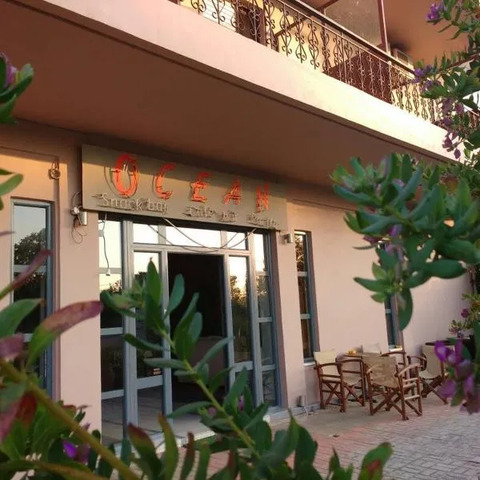
Still Looking for the Perfect Stay?

The Map: A Living Guide
The local map of Agios Andreas is more than a navigational tool; it’s a storytelling device. Each marker points to a site that has shaped the region:
Church of Saint Andrew – an 18th‑century edifice with frescoes depicting biblical scenes.
Agios Andreas Hill – offers panoramic views of the surrounding plains and the distant Ionian Sea.
Traditional Olive Oil Press – a working museum where visitors can taste freshly pressed oil.
These points are linked by winding roads that weave through villages steeped in history. By following the map, travelers can experience a seamless blend of natural beauty and cultural heritage.
Nearby Gems Worth Visiting
Agios Andreas is strategically positioned near several other charming locales. Each destination adds its own flavor to a day’s itinerary:
Kallithea Village – Known for its stone‑walled houses and the annual Feta Festival.
Katakolo Village – A coastal retreat famous for fresh seafood and sunset views over the Gulf of Patras.
Skafidia Village – Home to a 12th‑century monastery that still hosts monastic chants.
Myrtia Village – Features terraced vineyards producing world‑class Moschofilero wine.
Pyrgos City – A bustling market town where traditional crafts meet modern commerce.
Kouroutas Village – Offers a quiet escape with its ancient olive trees and rustic taverns.
A single day can be spent hopping from one of these villages to another, each stop enriching the traveler’s understanding of Elis’ diverse heritage.
How to Navigate the Map Effectively
Start at Agios Andreas Hill: From here you’ll have a clear view of the surrounding road network.
Follow the main trail toward Katakolo: This path passes through Kallithea and Skafidia, providing historical context along the way.
Return via Pyrgos City: The city’s market stalls offer souvenirs that capture the spirit of Elis.
Use a GPS or a printed map to keep track of distances. Most villages have signage in both Greek and English, but a basic knowledge of local landmarks will help you appreciate subtle nuances.
Cultural Highlights on the Map
Festivals: The Agios Andreas Fair held every August celebrates local music, dance, and culinary delights.
Architectural Styles: Notice the blend of Byzantine stonework in churches with modern wooden balconies in homes.
Natural Sites: The olive groves surrounding Agios Andreas are part of a UNESCO‑listed landscape that showcases sustainable agriculture practices.
Final Thoughts
Exploring the map of Agios Andreas is an invitation to step into a living history book. By weaving together its own landmarks with those of neighboring villages, travelers gain a comprehensive view of Elis’ cultural mosaic—one that balances tradition, nature, and community in equal measure.


